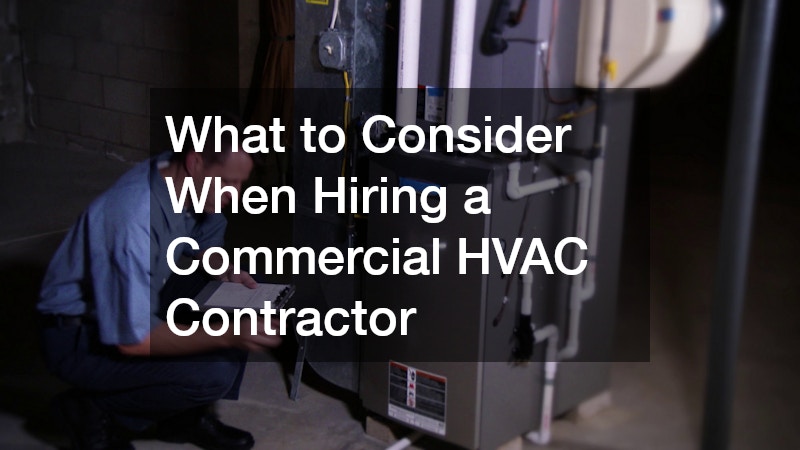
Hiring the right commercial HVAC contractor is a critical decision for any business or property owner. Commercial HVAC systems are complex, expensive, and essential to daily operations, affecting everything from employee comfort to energy efficiency and regulatory compliance. A poor hiring choice can lead to system failures, costly repairs, and prolonged downtime.
Understanding what to look for—beyond just price—helps ensure you select a contractor who is qualified, reliable, and capable of delivering long-term value.
What Qualifications Should a Commercial HVAC Contractor Have?
A commercial HVAC contractor must hold the proper licenses required by state and local authorities. Licensing confirms that the contractor meets minimum legal and technical standards to perform HVAC work. Because requirements vary by jurisdiction, it’s important to verify that the contractor’s license is current and applicable to commercial—not just residential—systems. In addition to licensing, industry certifications demonstrate advanced training and technical competency. Certifications related to refrigerant handling, energy efficiency, or manufacturer-specific systems indicate that the contractor is qualified to work on modern commercial equipment and compliant with environmental regulations.
Commercial HVAC systems differ significantly from residential systems in size, complexity, and operational demands. Experience matters because commercial projects often involve zoning, automation controls, load calculations, and integration with other building systems. An experienced contractor understands how to design, install, and maintain systems that meet the specific needs of offices, warehouses, retail spaces, or industrial facilities. Industry-specific expertise also reduces the likelihood of design errors, code violations, or inefficient system performance. When evaluating contractors, prioritize those with a proven track record in projects similar to yours.
Insurance and bonding are essential safeguards for both the contractor and the client. A reputable commercial HVAC contractor should carry general liability insurance, workers’ compensation coverage, and, when required, bonding. Insurance protects you from financial liability if accidents, property damage, or injuries occur during the project. Bonding provides additional assurance that the contractor will complete the work according to contract terms. Verifying these protections before work begins helps mitigate risk and demonstrates the contractor’s professionalism.
How to Evaluate the Reliability of an HVAC Contractor?
One of the most effective ways to assess a contractor’s reliability is by reviewing feedback from past clients. Ask for references from recent commercial projects and take the time to contact them. Inquire about the contractor’s punctuality, quality of work, problem-solving approach, and overall professionalism. Online reviews can also provide valuable insight, especially when patterns emerge. Consistent praise for communication and workmanship is a positive sign, while repeated complaints about delays or poor follow-up may indicate potential issues. Reliable contractors tend to have a solid reputation built on consistent performance.
A contractor’s work history offers concrete evidence of their capabilities. Reviewing a portfolio of completed projects allows you to see the scope, scale, and complexity of their previous work. Look for experience with systems similar to yours, including rooftop units, chillers, boilers, or building automation systems. Ask questions about challenges encountered on past projects and how they were resolved. This helps gauge the contractor’s problem-solving skills and adaptability—qualities that are especially important in commercial environments where unexpected issues can arise.
Clear and consistent communication is essential for successful commercial HVAC projects. From the initial consultation through project completion, the contractor should be responsive, transparent, and willing to explain technical details in understandable terms. Pay attention to how quickly inquiries are returned and how clearly proposals are presented. Contractors who communicate well are more likely to keep projects on schedule, address concerns promptly, and coordinate effectively with other trades. Poor communication early on often leads to misunderstandings and delays later.
What Should Be Included in a Commercial HVAC Contract?
A well-defined contract starts with a clear scope of work. This section should outline exactly what services are being provided, including system design, equipment installation, testing, and commissioning. Detailed project specifications reduce ambiguity and help prevent disputes. The contract should also define timelines, milestones, and responsibilities. Clearly identifying who is responsible for permits, inspections, and equipment procurement ensures accountability on both sides. The more precise the scope, the smoother the project execution.
Payment terms should be clearly stated and structured around project milestones rather than vague timelines. This protects both parties by aligning payments with completed work. Avoid contracts that require large upfront payments without corresponding deliverables. The contract should also outline how change orders are handled and billed. Commercial HVAC projects often evolve, and having a clear process for approving and pricing changes helps maintain budget control and transparency.
Warranties are a key component of any commercial HVAC contract. Equipment warranties protect against manufacturing defects, while workmanship warranties cover installation-related issues. Both should be clearly defined, including duration and coverage limitations. Many contractors also offer maintenance agreements as part of the contract. These agreements provide routine inspections, servicing, and priority support, helping extend system lifespan and reduce unexpected breakdowns. Including maintenance terms upfront can simplify long-term system management.
Hiring the right commercial HVAC contractor requires careful evaluation of qualifications, reliability, and contractual clarity. Licensing, experience, and proper insurance establish a foundation of competence, while references, work history, and communication practices reveal how a contractor performs in real-world conditions. A detailed contract that defines scope, payment terms, and warranties protects both parties and sets expectations from the start. By taking a thorough, informed approach, businesses can select a commercial HVAC contractor who delivers dependable performance, long-term efficiency, and peace of mind.